
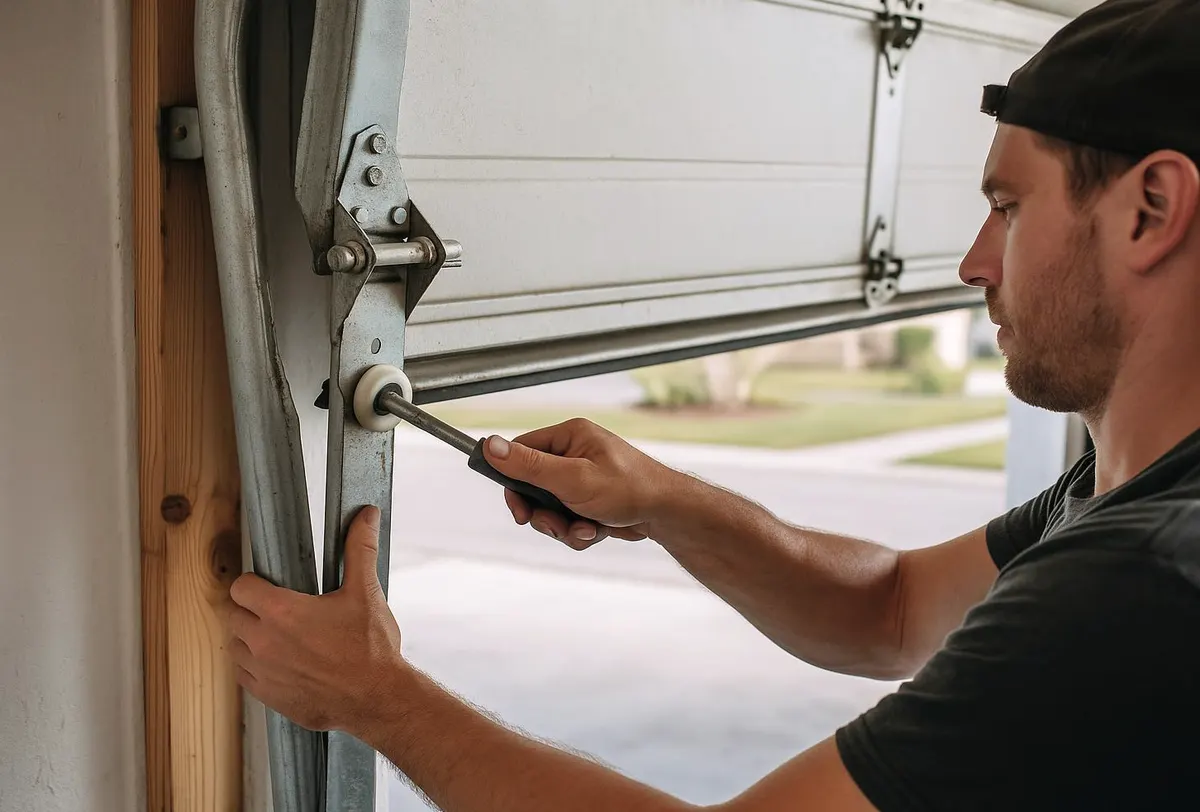
The Sound That Gets Your Attention
You pull into the driveway, hit the opener, and instead of the usual smooth hum, you get a grinding squeal that makes you wince. Maybe the door hesitates halfway up. Maybe it's been getting louder for weeks and you've just been ignoring it. That sound is almost always a lubrication problem, and it's one of the easiest things a homeowner can fix without calling anyone.
Around Bell, this shows up more than you'd expect. The heat and humidity that build up through the warmer months, followed by the afternoon downpours common to this part of Florida, wash grease and oil off metal parts faster than drier climates do. Moisture gets into joints, hinges start to show light surface rust, and the factory lubrication on a new door rarely lasts as long here as the manufacturer's manual suggests. Lubricating a garage door isn't a one-time task — it's seasonal maintenance, and late fall, after hurricane season has had its way with your hardware, is a good time to do it.
Tools and Supplies You'll Need
- A lithium-based garage door lubricant or a silicone spray lubricant (sold specifically for garage doors at most hardware stores)
- A clean, lint-free rag or shop towel
- A soft-bristle brush (an old toothbrush works)
- A step stool or ladder
- Work gloves
- Safety glasses
Step-by-Step: How to Lubricate Your Garage Door
- Close the door and disconnect the opener. Pull the manual release cord so the door is fully under your control, not the opener's. This matters for safety — you don't want the door cycling while your hands are near the moving parts.
- Wipe down the tracks first. Use a dry rag to remove dust, pollen, and grime from the vertical and horizontal tracks. Do not lubricate the tracks themselves — more on that below.
- Inspect the hinges for rust or wear. In this climate, hinges are usually the first thing to show surface rust after a wet stretch of weather. Brush off any flaking rust with the soft-bristle brush before applying lubricant.
- Lubricate the hinges. Spray a light coat directly onto the pivot point of each hinge, where metal meets metal. Open and close the door by hand a few times to work the lubricant in.
- Lubricate the rollers. If you have steel rollers, apply lubricant directly to the bearings. If you have nylon rollers (common on quieter, newer doors), lubricate only the bearing, never the nylon wheel itself — oil on nylon attracts grit and can actually make the roller wear faster.
- Lubricate the springs. Apply a light, even coat along the length of the torsion spring(s) above the door. This is strictly a surface wipe-down — you are not adjusting, touching the winding cones, or putting any tension on the spring. More on this limit below.
- Lubricate the lock and latch mechanism if your door has a manual lock, since this hardware tends to get stiff from the same humidity that affects everything else.
- Wipe off excess lubricant from all parts with a clean rag. Excess product just attracts dust and road grime, which turns into a gritty paste over time.
- Reconnect the opener and run the door through a few full cycles, watching and listening for any remaining grinding, catching, or uneven movement.
What to Use — and What to Avoid
Use a lithium-based or silicone-based lubricant made specifically for garage doors. These are formulated to resist washout from humidity and won't gum up with dust the way heavier products do.
- Avoid WD-40 as a long-term lubricant. It's a solvent and light cleaner, not a lubricant — it evaporates quickly and can actually strip existing lubrication, leaving parts drier than before.
- Avoid grease on nylon rollers and avoid heavy automotive or white lithium grease on tracks, which attracts dirt and builds up into a sludge that interferes with roller movement.
- Never spray lubricant into the tracks. The rollers ride against the tracks, not through lubricant, and oil on the track surface just collects debris that can cause the door to jump or bind.
- Avoid petroleum-based products on rubber weatherstripping at the bottom of the door, since they can cause the rubber to swell or break down faster — a real concern given how much moisture that seal already has to handle here.
Where DIY Ends and a Technician Should Take Over
Everything above — hinges, rollers, surface lubrication of springs, lock hardware — is safe and reasonable for a homeowner to handle with basic tools. But there's a clear line past that point. If lubrication doesn't fix the noise, if the door is still grinding or jumping after a full cleaning and re-lubing, or if you notice a stretched or visibly worn spring, that's a sign of a mechanical problem lubricant can't solve. Torsion springs are under extreme tension and adjusting, tightening, or replacing them is not a homeowner task under any circumstances. Similarly, if the door is off its track, the opener's internal gears are grinding, or cables look frayed, those need a trained technician.
When to Call Precision Garage Door of Bell
If you've gone through this process and the door still isn't moving smoothly, or if you'd rather have a trained eye catch problems before they turn into a stuck door on a Monday morning, our Garage Door Tune-Up & Maintenance service covers a full inspection along with proper lubrication of every moving part, inside and out. If the issue turns out to be spring-related, our Garage Door Spring Repair technicians handle that safely, with the right tools and training for the tension involved.
If your garage door in Bell, Trenton, Chiefland, Newberry, Old Town, Fanning Springs, Archer, or Bronson is squealing, grinding, or just not moving the way it used to, call Precision Garage Door of Bell and we'll get it running quiet and smooth again.