
What That Dent Actually Costs You by Spring
One more season of "we'll deal with it later" usually turns a $150 panel swap into a $900 door replacement. A dent that sits through a few more months of humidity and afternoon downpours gives water a place to collect, paint a place to crack, and rust a place to start eating through steel from the inside. If the dent is anywhere near a hinge, track, or panel seam, it's also quietly weakening the one part of your house that's supposed to hold firm when wind-load rules actually get tested. So before this becomes a kitchen-table argument that never gets resolved, here's how to tell which kind of dent you're actually looking at.
The Three-Question Test
Stand in front of the door and ask: Does it still open and close smoothly? Is the dent in the flat part of a panel, away from edges and hardware? Is it shallow enough that you can't see it from the street? If you answered yes to all three, you're probably looking at a cosmetic dent. If you answered no to any of them, keep reading, because the stakes go up fast.
Cosmetic Dents: Fix If You Want To, Not Because You Have To
A small ding from a bike pedal, a bumped trash can, or a stray basketball usually lands in the middle of a panel, away from any moving parts. These dents don't affect the door's operation and, on steel doors, can often be pulled out or filled the same way a car body shop handles a fender dent:
- Panel pull/suction method: works on shallow dents in steel doors, often DIY-able with a dent puller kit
- Auto body filler and repaint: for dents with creased paint, sand, fill, prime, and repaint to match
- Leave it alone: genuinely a valid option if the dent is small, high on the panel, and the door still seals and seats correctly
The one thing to watch here even on a cosmetic dent: check it after a storm. A shallow dent that's holding water after an afternoon downpour is a dent that's going to rust before summer, and once steel starts rusting from a trapped-moisture dent, the clock changes.
Functional Dents: The Door Still Runs, But It's Working Harder
These are dents that distort the panel just enough to cause a drag, a scrape, or a spot where the door doesn't seat flush against the weatherstripping. Signs you're in this category:
- The opener strains or makes a different sound at one spot in the door's travel
- You can see daylight or feel airflow at the bottom seal only where the dent is
- The door looks slightly bowed when fully closed, even if it still latches
This matters more here than it would somewhere dry and mild. A gap at the dent is an entry point for wind-driven rain during a storm, and it's a spot where humid air gets in and sits, which is exactly the setup for swelling, warping, or rust on a steel or wood-composite door. These dents are usually repairable with a panel replacement rather than a whole new door, which keeps the cost down if you catch it early.
Structural Dents: This Is the One That Settles the Argument
Some dents aren't cosmetic and aren't just a minor function issue — they've compromised the door's structure. You're in this territory if:
- The dent is at or near a hinge, roller bracket, or track mounting point
- There's a crease that runs vertically through a full panel, not just a localized dent
- The door has visibly separated or buckled at a panel seam
- The dent happened from something significant — a vehicle impact, storm debris, or the door coming off track and catching on the frame
A structural dent isn't something a dent puller or body filler fixes, because the steel itself has lost its shape and its strength at exactly the points engineered to resist wind load. That's not a cosmetic problem, that's the door's ability to stay in its track and withstand pressure during the next high-wind event. In these cases, the panel (or the whole door, if the damage affects multiple panels or the frame) needs to be replaced, not patched.
When to Call Precision Garage Door of Bell
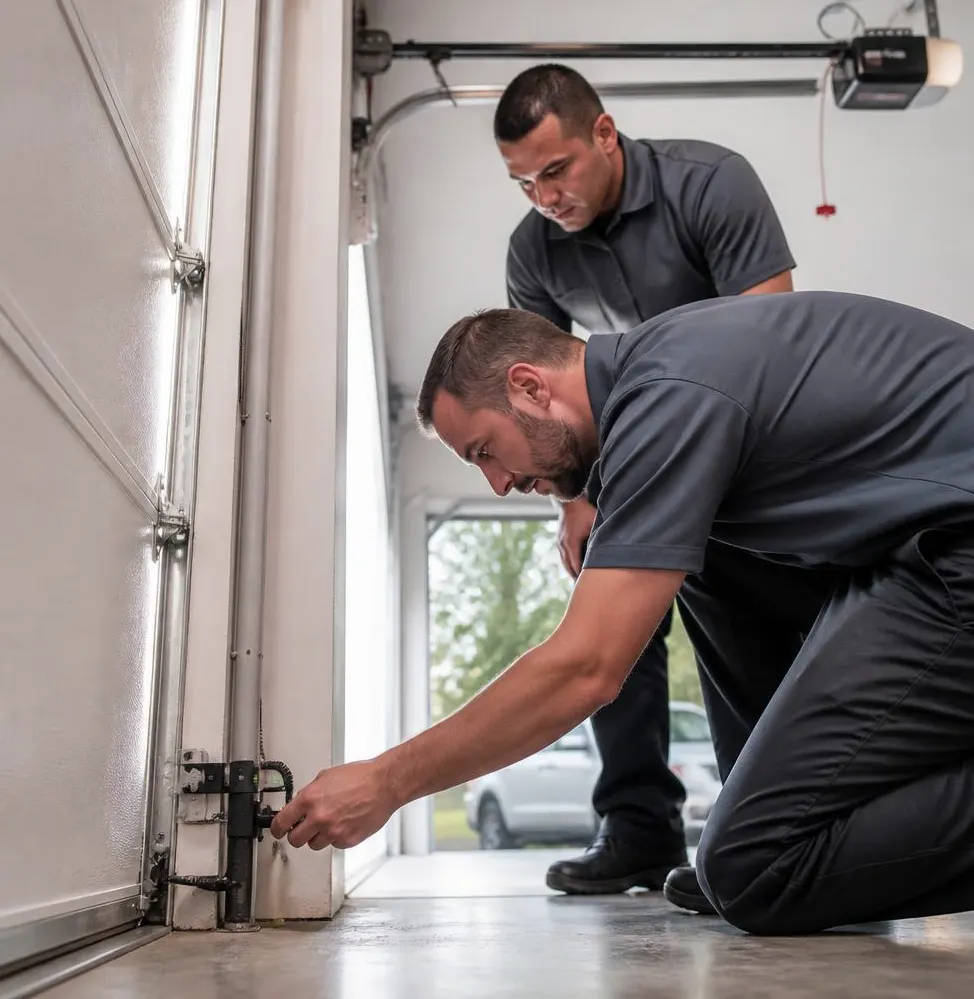
If the dent has thrown the door off track, if it's near a hinge or roller, or if you're not sure whether what you're looking at is cosmetic or structural, that's the point to call in a second opinion rather than guess. Our technicians can tell the difference in a few minutes on site — something that's genuinely hard to do from a photo texted between spouses. For dents that have pulled the door out of alignment, our Off Track Door Repair service gets it running true again. For dents that have compromised a panel or several panels beyond repair, Garage Door Installation & Replacement lets you fix it right instead of patching around a weak spot that'll show up again during the next storm season.
If there's a dent in your garage door that's been the subject of debate at your house, let us settle it. Call Precision Garage Door of Bell and we'll tell you straight whether it's a quick fix or time for something new — serving Bell, Trenton, Chiefland, Newberry, Old Town, Fanning Springs, Archer, and Bronson.