
What a Service Call Looks Like After the Wind Picks Up
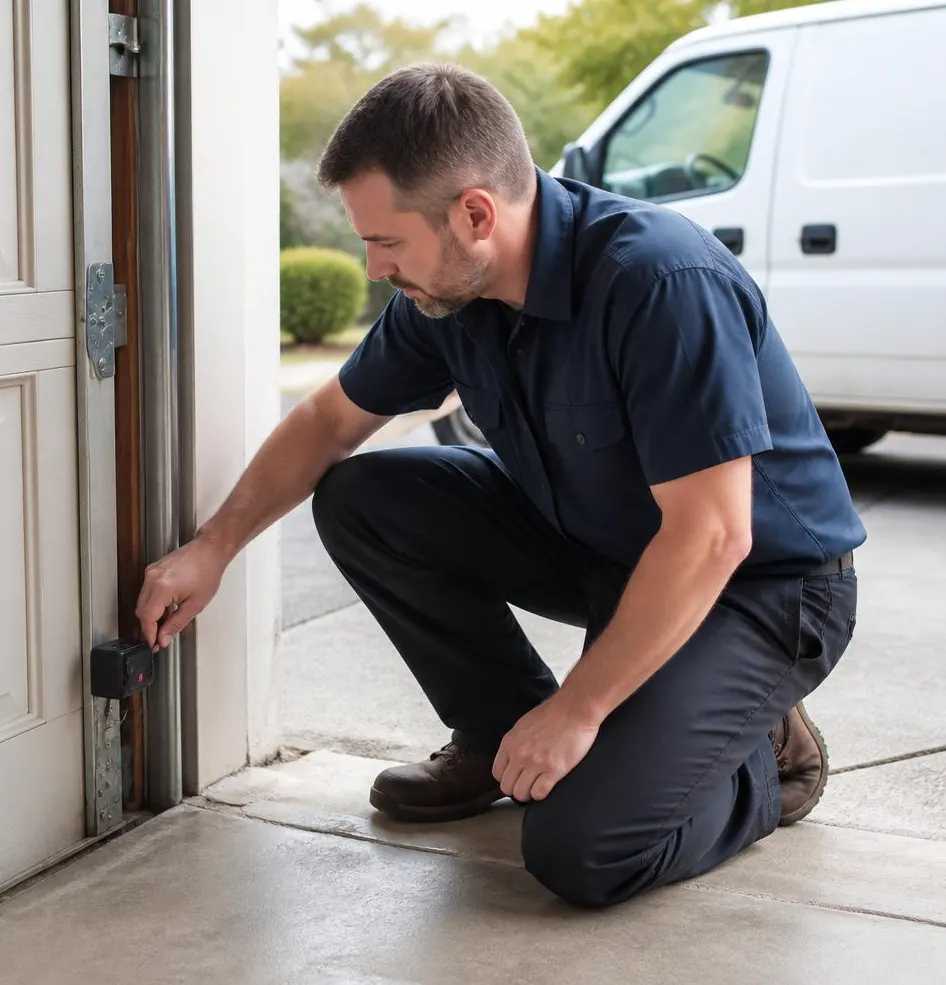
A technician pulls up to a house a day or two after a storm and the door looks fine from the curb. Then he opens the panel on the inside and finds the top bracket pulled half an inch off the wall stud, the track bowed where the wind pushed and pulled against it, and weatherstripping torn loose at the bottom corner where water had been driving in sideways. Sometimes it's worse: a panel cracked from flexing in and out during gusts, or an opener rail bent because the door tried to lift off its tracks when pressure built up inside the garage. None of this happens because the door is old or cheap. It happens because garage doors are built to hold their own weight and roll up and down smoothly — not to resist the kind of pressure a tropical storm or a strong squall line throws at a flat 7-by-9-foot or larger surface.
Why the Garage Door Is the Weakest Wall in the House
Every other wall on a house is a solid, continuous structure tied into the frame. The garage door is a large moving panel held in place by tracks, rollers, hinges, and a handful of lag bolts into the framing around the opening. When wind hits the front of a house, pressure builds up outside; when it finds a way in — through a failed door, a broken window, or a gap under the eaves — pressure builds up inside too, pushing against the roof and walls from the inside out. That's how a garage door failure can lead to much bigger damage than a bent panel. In a region that sees hurricane-season storms with real wind-load demands, an older door that was never built or reinforced for those loads is often the first component to give.
A Pre-Storm Checklist Worth Doing Now
With storm season still active into November, this is the time to check these items rather than wait for a watch to be issued:
- Tracks and rollers: Look for rust streaks, bent sections, or rollers that wobble instead of rolling smoothly. Humidity and salt air speed up corrosion even on tracks that look fine from a few feet away.
- Hardware tightness: Hinges, roller brackets, and the lag bolts holding the track to the framing loosen over time from vibration and repeated opening and closing. Loose hardware is exactly what lets a track pull away under wind pressure.
- Weatherstripping: Cracked or torn seals around the bottom and sides let wind-driven rain in during the afternoon downpours this area gets regularly, and a torn seal is often the first thing to fail in sustained wind.
- Reinforcement struts: Horizontal struts bolted across the back of each panel stiffen the door against bowing. Many older doors in this area were installed without them.
- Manual release and backup power: Know how to disconnect the opener and operate the door by hand if power goes out, and consider whether your opener has battery backup so the door can still close if a storm knocks out electricity mid-afternoon.
Reinforcing an Older Door Instead of Replacing It
Not every door needs to be replaced to handle wind better. Retrofit strut kits, reinforced end hinges, and heavier-duty track brackets can bring an older door closer to current wind-load expectations at a fraction of the cost of a full replacement, which typically runs from the low thousands to several thousand dollars depending on size and materials. The trade-off is that reinforcement only goes so far — a door with a cracked panel, rusted-through track, or an opener that's already struggling isn't a good candidate for patch fixes, and a full installation makes more sense once a door is working against you instead of with you.
After the Storm Passes
Once the weather clears, walk the door again rather than assuming it's fine because it still opens and closes. Humidity and moisture from storm runoff cause rust to show up on hardware within days, and wood or composite doors can swell at the bottom edge, making the door bind in the track or drag against the weatherstripping. Catching that early prevents a stuck door from turning into an off-track emergency later.
When to Call Precision Garage Door of Bell
If your door bowed, a panel cracked, the track pulled away from the wall, or the door came off its rollers during a storm, that's not a wait-and-see situation — call for an inspection. Precision Garage Door of Bell handles Off Track Door Repair for doors that shifted during high wind, and offers Garage Door Tune-Up & Maintenance to catch loose hardware, worn rollers, and failing weatherstripping before the next system rolls through. For doors that are past reinforcing, our team also handles full Garage Door Installation & Replacement with wind-rated options suited to this area.
Call Precision Garage Door of Bell today to get your garage door checked and storm-ready before the next system moves through Bell, FL.